
 The Steady Supply

 Personalized Vibes
Passionflower: Nature’s Science-Backed Sedative
There is something deeply reassuring about an herb that has been around for centuries and still has a pretty solid reputation, not to mention clinical studies to back up the benefits.
Have you heard of passionflower?
This insanely beautiful purple flower has been used for hundreds of years, developing a reputation for helping people relax, sleep and generally take the edge off.
And now, modern researchers are taking a closer look at why.

A Very Brief History of a Very Chill Flower
Passionflower, or Passiflora incarnata, is native to the southeastern United States and parts of Central and South America. Indigenous peoples traditionally used the plant for medicinal purposes, including as a sedative, long before European explorers encountered it.
In the 16th century, Spanish explorers learned about passionflower in South America and eventually brought the plant to Europe, where it became part of European folk medicine. Traditional use increasingly centered around its calming and sedative properties.
So the short version is: humans have been asking this flower to help them chill out for a very long time.
Now science has been proving it.

Passionflower and Anxiety
One of the most studied uses of passionflower is anxiety.
In a small double-blind randomized clinical trial, 36 people with generalized anxiety disorder received either passionflower extract or oxazepam, a commonly used anti-anxiety medication, for four weeks. Both groups experienced improvements in anxiety symptoms, with no significant difference between the two treatments at the end of the study. The researchers noted that the medication worked more quickly, while passionflower was associated with less impairment of job performance.
Another randomized, double-blind, placebo-controlled study looked at passionflower in 60 patients preparing to undergo spinal anesthesia, a situation where anxiety is understandably not exactly hard to come by. Participants who received passionflower before the procedure experienced a significantly smaller increase in preoperative anxiety than those who received the placebo.
Passionflower and Sleep
A 2011 double-blind, placebo-controlled study gave 41 healthy adults either passionflower tea or placebo tea for seven nights. Participants reported significantly better subjective sleep quality during the passionflower period.
Then researchers took things a step further.
A randomized, double-blind, placebo-controlled study involving 110 adults with insomnia found that two weeks of passionflower extract significantly increased total sleep time compared with placebo.
And in 2024, another randomized, double-blind, placebo-controlled trial looked at 65 adults experiencing stress and insomnia. After 30 days, the passionflower group had significantly reduced perceived stress and increased total sleep time compared with placebo. The researchers also reported improvements in measures of general psychological health.
So, we cannot promise that passionflower will tuck you into bed, fluff your pillow and personally deal with tomorrow’s problems, but the human research does suggest it may help support sleep quality, total sleep time and relaxation, particularly in people experiencing stress or sleep difficulties.
Which is honestly a pretty solid résumé for a flower.

What Makes Passionflower Calming?
Researchers are particularly interested in passionflower’s relationship with GABA, a neurotransmitter involved in regulating nervous system activity.
Think of GABA as part of your body’s braking system. When the nervous system is hitting the gas, GABA helps apply the brakes.
Laboratory research suggests compounds in passionflower may influence the GABA system, which could help explain some of the plant’s calming effects.
Enter Chill TONIC
This is exactly why passionflower has a place in Chill TONIC.
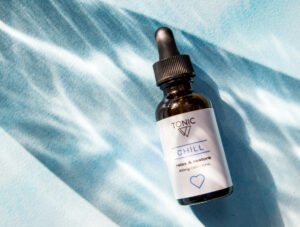
Chill TONIC combines CBD with passionflower, lemon balm and ashwagandha, creating a botanical blend designed for moments when you’d like your nervous system to stop acting like it has been personally assigned every problem on Earth.
Passionflower brings centuries of traditional use and emerging clinical research around relaxation, anxiety and sleep. The other botanicals complement it with their own histories and research as natural sedatives, while CBD rounds out the formula.
The goal is to support a little more calm when your brain and body could use some help remembering that not every moment requires a five-alarm response.
The Bottom Line
Passionflower has been around for centuries, and it turns out there may be a good reason it has stuck around.
Clinical studies suggest that passionflower may help support relaxation, ease anxiety, reduce perceived stress and improve certain aspects of sleep. The research is still developing, but the evidence so far is genuinely promising.
So maybe we don’t need to reinvent relaxation. Maybe we just need to take a few notes from the plants that figured it out a long time ago.
And if you need a little help getting there, Chill TONIC has your back.