 The Steady Supply

 Personalized Vibes
Tips for Social Anxiety
We’re more connected than ever, and somehow, less comfortable connecting.
We spend hours a day engaging with screens, curating our thoughts, and communicating without ever having to feel the immediacy of being seen in real time. There’s space to edit, pause, and present exactly what we want.
So when it comes to in-person interaction, it can feel overwhelming. Being perceived is weird and uncomfortable, and going into social interactions thinking “I have social anxiety” can make you act even weirder.
But that reaction isn’t random, and it’s not a reflection of your personality or your ability to connect. It’s your nervous system doing exactly what it’s designed to do: assess for safety.
And once you understand that, social anxiety stops feeling like a personal flaw, and starts making a lot more sense.

Social Anxiety Is a Nervous System Experience
Social anxiety isn’t just about thoughts. It’s a full-body response.
When your brain perceives social interaction as a potential threat (even subtly), your nervous system shifts into protection mode. This can look like:
- Freeze: you go quiet, your mind blanks, words disappear
- Fawn: you people-please, over-agree, or perform to be liked (this is usually when I say something really weird, and then walk away like “what TF did I just say”🤦🏻♀️)
- Flight: you avoid situations altogether
This is your body trying to keep you safe, not a personality flaw.
The key insight:
You can’t think your way out of a state your body is driving.
Why “Just Be More Confident” Doesn’t Work
If your nervous system is dysregulated, your brain is operating in survival mode, not social mode.
That’s why:
- You replay conversations afterward
- You feel hyper-aware of yourself
- You struggle to stay present
Confidence doesn’t come first.
Safety does.

The Missing Piece: Regulating Your State
Before you keep trying to “be better socially,” it’s more effective to help your body feel grounded and safe.
Here are a few simple ways to do that:
1. Orienting
Look around your environment and gently take in what’s around you.
This signals to your brain: I’m not in danger right now.
2. Conscious Breath
Try inhaling for 4 seconds, exhaling for 6.
Longer exhales help shift your body out of stress mode. Find more breath work techniques here.
3. Drop Into Your Body
Press your feet into the ground. Feel your hands. Notice physical sensations.
Social anxiety pulls you into your head, this brings you back.
4. Micro-Movements
If you tend to freeze, subtle movement helps:
- roll your shoulders
- shift your weight
- take a slow walk before entering a space
5. Co-Regulation
Your nervous system relaxes faster with others.
A quick conversation with someone you feel safe with before an event can make a noticeable difference.

Where Supportive Tools Come In
While practices are powerful, having supportive tools can make it easier to access a regulated, present state – especially if your baseline is already a bit wired or depleted.
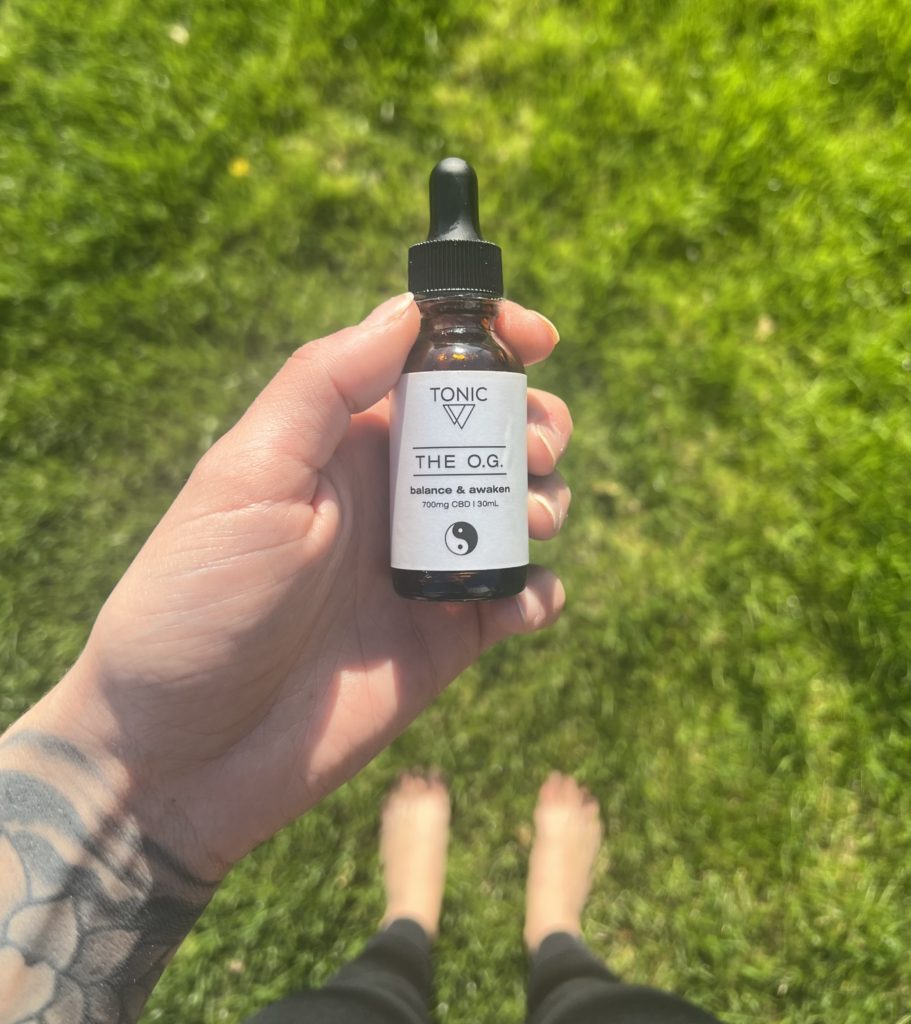
This is where something like The O.G. TONIC comes in.
Why The O.G. TONIC Helps With Social Anxiety
Unlike formulas that simply sedate or “take the edge off,” The O.G. TONIC is designed to balance rather than blunt.
Because with social anxiety, the goal isn’t to feel less, it’s to feel stable, clear, and present.
The O.G. TONIC supports:
- Balanced energy levels
Instead of making you sleepy, it helps smooth out that wired-but-tired feeling so you can show up with steady, grounded energy - Calm without dullness
It helps take the edge off anxious activation while still allowing you to stay engaged and alert - Mood regulation
By supporting a more even emotional baseline, it can reduce the highs (overstimulation) and lows (shutdown or withdrawal) - A more adaptable nervous system
Making it easier to move into a social, connected state instead of getting stuck in freeze or overdrive
In other words:
You feel more like yourself, just without the internal chaos.
A Simple “Pre-Social” Ritual
If you tend to feel anxious before events, try this:
- Take The O.G. TONIC about 20–30 minutes beforehand
- Do 2–3 minutes of slow breathing
- Orient to your environment when you arrive
- Focus outward (curiosity over self-monitoring)
This combination helps shift both your biology and your attention, which is where real change happens.
The Bigger Picture
Social anxiety doesn’t mean you’re awkward, broken, or bad at connecting.
It often means your nervous system learned that being seen wasn’t entirely safe at some point.
The goal isn’t to force yourself to be different, it’s to create enough internal safety that your natural social self can actually come online.
And when that happens, something shifts:
Conversations feel easier.
You’re more present.
You stop performing, and start connecting.