
 The Steady Supply

 Personalized Vibes
What’s The Deal With Cortisol? (And How To Regulate It)
If you’ve spent more than six minutes on social media lately, you’ve probably been told your cortisol is “through the roof.”
Apparently, cortisol is responsible for your belly fat, your afternoon crash, your inability to remember why you walked into the kitchen, your craving for tortilla chips at 10 p.m., and probably Mercury retrograde while we’re at it.
The truth is, cortisol isn’t trying to ruin your life. In fact, if your body stopped making it entirely, we’d have a much bigger problem.
Like many things in life, cortisol is all about balance.
Let’s separate the facts from the fear mongering.

First, What Is Cortisol?
Cortisol is a hormone produced by your adrenal glands. It’s often called the “stress hormone,” but that’s only part of the story.
Its real job is to help your body adapt to challenges.
Cortisol helps:
- Regulate blood sugar
- Control blood pressure
- Reduce inflammation when needed
- Mobilize energy stores
- Influence memory formation
- Help maintain your sleep-wake cycle
- Support immune function
- Help your body respond during physical or emotional stress
Without cortisol, your body couldn’t properly wake up in the morning, recover from illness, respond to exercise, or deal with unexpected challenges.
In other words, cortisol isn’t the villain. It can just sometimes get out of hand.

So Why Does Cortisol Get Such a Bad Reputation?
Because modern life has basically turned the emergency alarm into background music.
Our bodies evolved to handle short bursts of stress like running from a bear or escaping some other life threatening danger.
Now our stressors look more like:
- 97 unread emails
- Constant notifications
- Financial stress
- News headlines
- Family responsibilities
- Sleeping with one eye open because your dog insists that every squirrel at 2 a.m. is an immediate threat to national security
The problem isn’t cortisol itself.
The problem is when your stress response rarely gets the memo that the danger has passed.
Research shows that chronic psychological stress can dysregulate the hypothalamic-pituitary-adrenal (HPA) axis, the system responsible for controlling cortisol production. Over time, this may contribute to metabolic changes, sleep disruption, mood changes, impaired immune function, and increased inflammation.¹⁻³

What Happens When Cortisol Stays Elevated?
Chronically elevated cortisol doesn’t affect everyone the same way, but research has linked prolonged stress hormone exposure with:
Poor Sleep
Cortisol naturally peaks in the morning and gradually declines throughout the day.
If it’s still elevated late at night, your brain may think it’s time to stay alert instead of winding down.
Studies have associated elevated evening cortisol with insomnia and reduced sleep quality.⁴
Brain Fog and Memory Problems
High cortisol over long periods may affect the hippocampus, the brain region involved in learning and memory.
Research has found associations between prolonged cortisol exposure and impaired memory performance.⁵
Which explains why you can remember every lyric from a song you heard in 2004 but can’t remember your own password that you reset yesterday.

Increased Belly Fat
Cortisol doesn’t directly “cause” belly fat.
However, elevated cortisol may increase appetite, encourage cravings for calorie-dense foods, and influence where fat is stored, particularly around the abdomen.⁶
It’s not your body betraying you.
It’s your body preparing for what it thinks is an apocalypse.
Unfortunately, the apocalypse is usually just your inbox.
Blood Sugar Changes
Cortisol increases blood glucose so your muscles and brain have immediate fuel during stressful situations.
Helpful if you’re outrunning danger.
Less helpful when the biggest threat is a passive-aggressive Slack message.
Over time, repeated elevations in cortisol may contribute to insulin resistance and blood sugar dysregulation.⁷
Increased Inflammation
This one surprises people.
Cortisol is actually anti-inflammatory.
But chronic stress can eventually reduce the body’s sensitivity to cortisol, making it less effective at regulating inflammation over time. Researchers sometimes refer to this as “glucocorticoid resistance.”⁸

Can You Actually Lower Cortisol?
Not exactly. And honestly, you shouldn’t want to.
Healthy cortisol is essential.
The goal isn’t to eliminate cortisol. It’s to support a healthy, well-regulated stress response.
Clinical research consistently shows that the following lifestyle habits can help support healthier cortisol rhythms:
- Regular exercise (without overtraining)
- Consistent sleep
- Morning sunshine
- Meditation and mindfulness
- Spending time in nature
- Strong social connections
- Balanced nutrition
- Limiting excessive alcohol intake
- Managing chronic psychological stress
And yes…
Some botanicals have also been studied for their effects on stress, cortisol, and HPA axis regulation.
Let’s talk about those.

CBD and Cortisol: Can It Help?
CBD has become one of the most researched plant compounds for stress support.
Rather than “turning off” stress, CBD appears to help support the body’s endocannabinoid system, which plays an important role in maintaining physiological balance, including regulation of mood, stress responses, sleep, and immune function.
Several studies suggest CBD may help reduce subjective anxiety during stressful situations, while preclinical research indicates it may influence HPA axis activity and cortisol regulation.⁹⁻¹²
One particularly interesting study found that CBD altered cortisol secretion patterns in healthy adults, suggesting an interaction with the body’s stress response system.¹³
CBD has also been associated with:
- Better sleep quality
- Reduced anxiety
- Improved resilience during stressful situations
- Support for recovery after acute stress
Which is great news because life keeps handing out plot twists nobody requested.

Ashwagandha: One of the Best-Studied Adaptogens
If there were a gold medal for stress-supporting herbs, ashwagandha would probably already have a trophy shelf.
Multiple randomized controlled trials have found that standardized ashwagandha extracts significantly reduced cortisol levels while improving perceived stress, anxiety, sleep quality, and overall well-being.¹⁴⁻¹⁷
One 2021 systematic review concluded that ashwagandha supplementation consistently reduced stress and cortisol compared with placebo.¹⁷
Adaptogens don’t force your body in one direction.
Instead, they appear to help improve resilience and adaptation to stress.
Think of them as helping your internal thermostat stop overreacting every time someone sends you an email that begins with “Just circling back…”

Lemon Balm: Calm Without the Couch Lock
Lemon balm (Melissa officinalis) has been used traditionally for centuries to promote relaxation.
Modern research suggests it may help support calm mood, reduce stress, and improve sleep quality.
Several clinical studies found improvements in anxiety symptoms and stress-related mood after supplementation with lemon balm extracts.¹⁸⁻²⁰
Researchers believe lemon balm may increase GABA activity in the brain, promoting relaxation without excessive sedation.
Passionflower: Nature’s Deep Breath
Passionflower (Passiflora incarnata) has also been studied for anxiety and stress support.
Clinical trials have shown passionflower may reduce anxiety similarly to some conventional medications while causing fewer cognitive side effects.²¹
Other studies suggest it may improve sleep quality by promoting relaxation through GABA-related pathways.²²
It’s less about knocking you out.
More about helping your nervous system stop rehearsing tomorrow’s awkward conversations at midnight.

Meet Your Cortisol Support Team
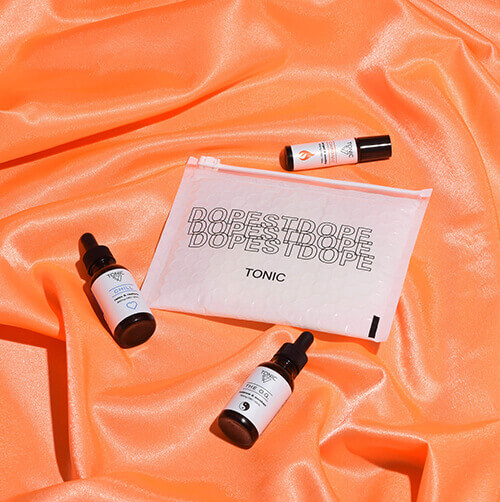
The O.G. TONIC
Our daytime favorite was designed for everyday balance.
What’s inside?
CBD + Ashwagandha
Why people love it
The O.G. TONIC is ideal for everyday stress support without feeling overly sleepy. It’s designed to help you stay steady during busy days, demanding schedules, and all the tiny daily catastrophes that somehow take over our lives even when we try *so hard* to mono-task.

Learn more about The O.G. TONIC here!
Chill TONIC
Sometimes your nervous system deserves a group hug. That’s where Chill TONIC comes in.
What’s inside?
CBD, Ashwagandha, Lemon Balm, and Passionflower
Why people love it
Chill TONIC is ideal for evenings, high-stress days, travel anxiety, or those moments when your brain decides to short circuit because you’re so overwhelmed.

Learn more about Chill TONIC here!
The Bottom Line
Cortisol isn’t the enemy!! It’s one of your body’s most important survival tools.
The goal isn’t to eliminate it or “detox” it. It’s to create the conditions where your body knows it can safely return to balance after stress.
That means prioritizing sleep, movement, nourishing food, meaningful connection, and recovery.
And if you want a little extra support along the way, ingredients like CBD, ashwagandha, lemon balm, and passionflower have a growing body of clinical evidence suggesting they may help promote a healthier stress response and support overall nervous system resilience.
Because the world doesn’t seem to be getting any less weird anytime soon. The least we can do is give our nervous systems a fighting chance.
Clinical References
- McEwen BS. Protective and damaging effects of stress mediators. N Engl J Med. 1998.
- Tsigos C, Chrousos GP. Hypothalamic-pituitary-adrenal axis and neuroendocrine factors. J Psychosom Res. 2002.
- Chrousos GP. Stress and disorders of the stress system. Nat Rev Endocrinol. 2009.
- Buckley TM, Schatzberg AF. On the interactions of the HPA axis and sleep. Sleep Med Rev. 2005.
- Lupien SJ, et al. Effects of stress throughout the lifespan on the brain, behaviour and cognition. Nat Rev Neurosci. 2009.
- Epel ES, et al. Stress and body shape: stress-induced cortisol secretion associated with abdominal fat. Psychosom Med. 2000.
- Hackett RA, Steptoe A. Type 2 diabetes and the stress response. Nat Rev Endocrinol. 2017.
- Miller GE, Chen E, Zhou ES. If it goes up, must it come down? Chronic stress and glucocorticoid resistance. Psychol Bull. 2007.
- Blessing EM, et al. Cannabidiol as a potential treatment for anxiety disorders. Neurotherapeutics. 2015.
- Shannon S, et al. Cannabidiol in anxiety and sleep. Perm J. 2019.
- Crippa JAS, et al. Cannabidiol and anxiety. Curr Neuropharmacol. 2023.
- Bergamaschi MM, et al. CBD reduces anxiety induced by simulated public speaking. Neuropsychopharmacology. 2011.
- Zuardi AW, et al. Effects of cannabidiol on neuroendocrine responses, including cortisol, in healthy volunteers.
- Chandrasekhar K, et al. A prospective randomized double-blind placebo-controlled study of ashwagandha on stress and anxiety. Indian J Psychol Med. 2012.
- Lopresti AL, et al. Ashwagandha and stress in adults. Medicine. 2019.
- Salve J, et al. Adaptogenic and anxiolytic effects of ashwagandha. Cureus. 2019.
- Pratte MA, et al. Ashwagandha for stress and anxiety: systematic review and meta-analysis.
- Kennedy DO, et al. Acute cognitive and mood effects of lemon balm. Psychosom Med. 2004.
- Cases J, et al. Lemon balm extract reduces stress symptoms. Med J Nutrition Metab. 2011.
- Scholey A, et al. Lemon balm and mood. Nutrients. 2014.
- Akhondzadeh S, et al. Passionflower in generalized anxiety disorder. J Clin Pharm Ther. 2001.
- Ngan A, Conduit R. A double-blind, placebo-controlled investigation of passionflower and sleep quality. Phytother Res. 2011.