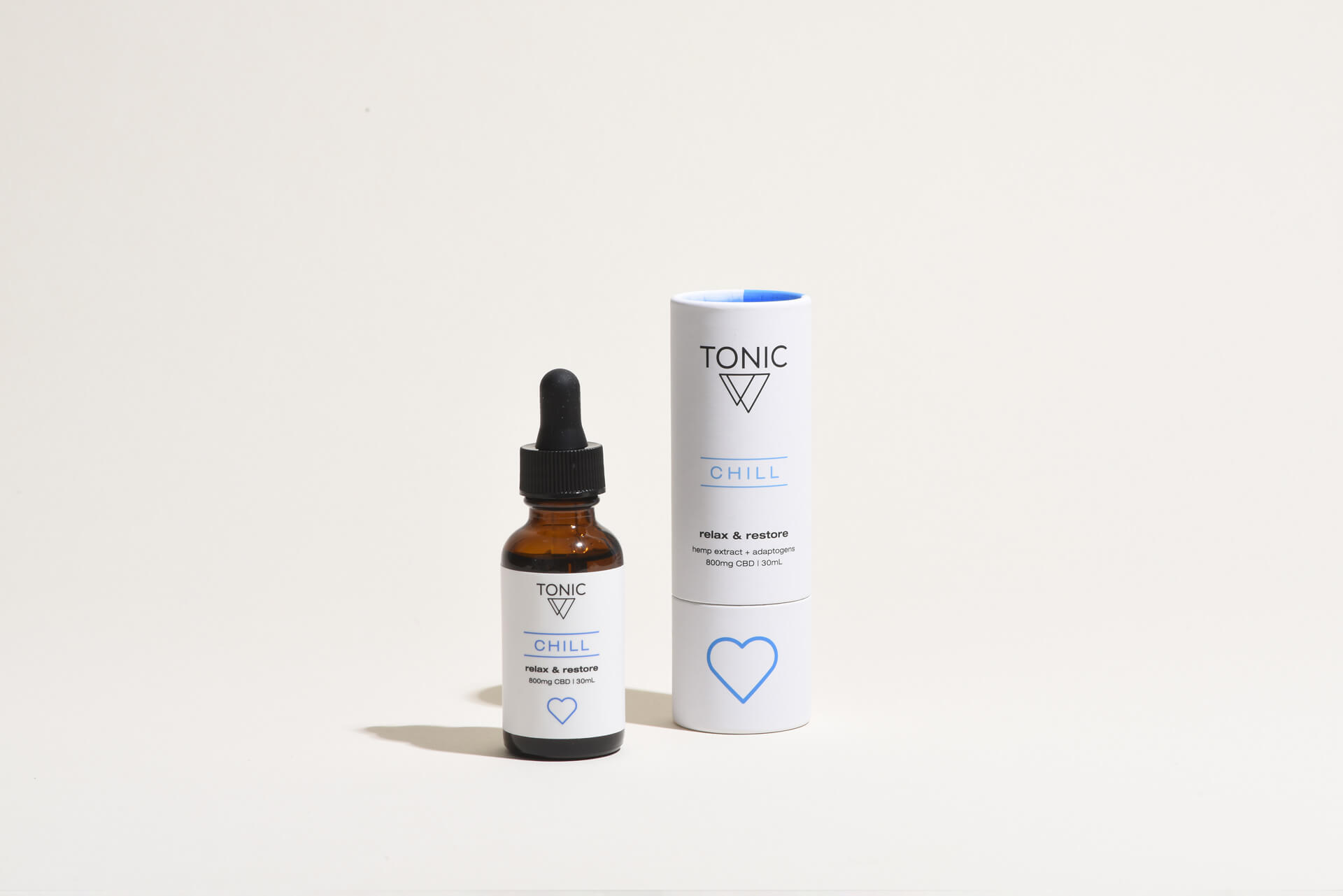
 The Steady Supply

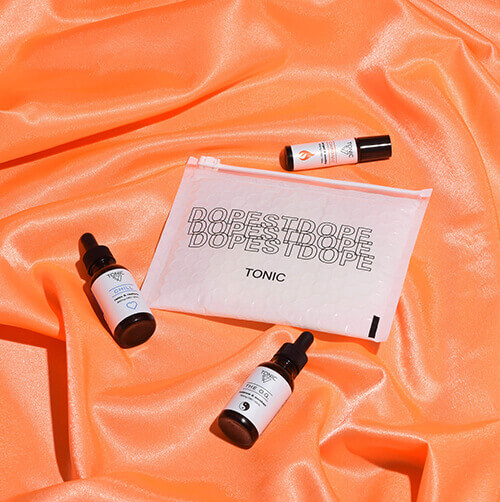 Personalized Vibes
Common Myths About CBD That Still Won’t Die
CBD has officially crossed over from “niche wellness trend” to everyday household name. But with that rise in popularity has come a lot of misinformation.
Some myths are harmless. Others set unrealistic expectations, create confusion, lead people to use CBD incorrectly or avoid it all together depending on the myths they believe.
So let’s clear the air.
Below are some of the most persistent CBD myths – debunked with what science actually says.

Myth #1: “CBD gets you high”
Let’s start with the big one.
Reality: CBD is not intoxicating.
Unlike THC (tetrahydrocannabinol), CBD does not produce the euphoric or psychoactive “high” associated with cannabis.
CBD interacts with the body’s endocannabinoid system, a regulatory network involved in modulating mood, sleep, pain, and immune function without altering perception or cognition.
What the research says:
A comprehensive review published in Neurotherapeutics found that CBD does not induce the psychoactive effects associated with THC and has a distinct pharmacological profile (Zuardi et al., 2017).
Bottom line:
CBD may help you feel more balanced, but not high.

Myth #2: “All CBD products are the same”
Reality: Quality, formulation, and sourcing matter a lot.
CBD products vary widely in:
- Extraction method
- Spectrum (full, broad, isolate – see below)
- Potency and purity
“Spectrum” refers to how many of the hemp plant’s natural compounds are included – ranging from CBD alone (isolate) to CBD plus additional cannabinoids and plant compounds (full or broad spectrum).
What the research says:
A widely cited study published in JAMA (Bonn-Miller et al., 2017) analyzed 84 CBD products and found that nearly 70% were mislabeled, with some containing more or less CBD than advertised, and some even containing higher levels of THC.
Where this matters in real life:
This is exactly why we’re so intentional about how we formulate at TONIC – clean sourcing, thoughtful blends, lab reports, and transparency – so you actually know what you’re getting.
Bottom line:
Not all CBD is created equal, and choosing a trustworthy source matters.

Myth #3: “More CBD = better results”
Tempting, but not how biology works.
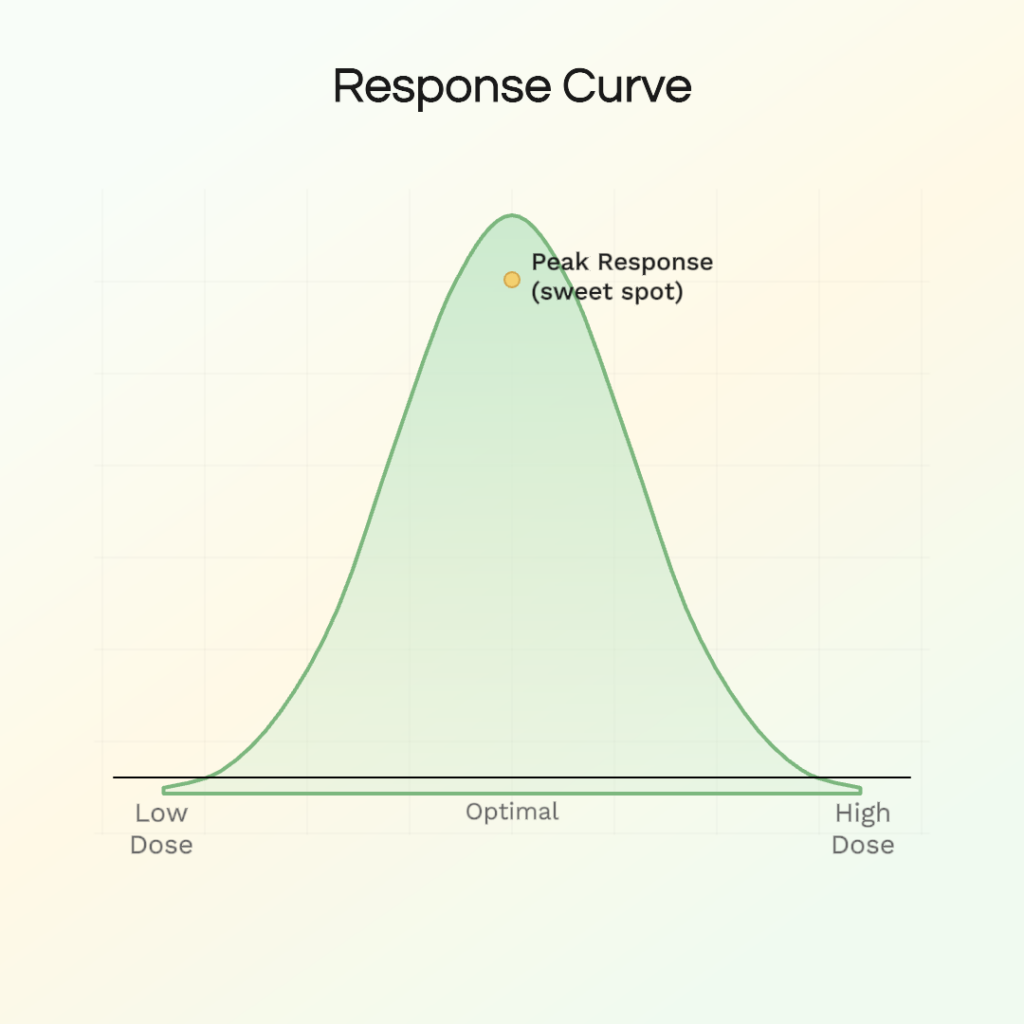
Reality: CBD effects are dose-dependent and not always linear.
Research suggests CBD may follow a bell-shaped dose-response curve, meaning too little or too much may be less effective depending on the outcome being measured.
What the research says:
A study in Brazilian Journal of Psychiatry (Linares et al., 2019) found that CBD reduced anxiety at moderate doses, but not at higher or lower doses.
Where this shows up:
A lot of people assume if they’re not feeling something, they just need more. In reality, it’s often about adjusting, not maxing out.
Bottom line:
More isn’t always better. Finding your “sweet spot” matters.
Myth #4: “CBD is completely risk-free”
Natural doesn’t automatically mean risk-free.
Reality: CBD is generally well-tolerated, but it can interact with medications in meaningful ways.
CBD is metabolized by the cytochrome P450 enzyme system, which is responsible for breaking down many medications. When CBD affects these enzymes, it can change how other drugs are processed in the body.
What the research says:
Reviews in Epilepsia (Gastón & Friedman, 2017) and Drugs (Stout & Cimino, 2014) show that CBD can inhibit key CYP450 enzymes like CYP3A4 and CYP2C19.
Why this matters (especially for heart medications)
Many cardiovascular drugs rely on these same pathways, including:
- Calcium channel blockers
- Beta blockers
- Antiarrhythmics
- Statins
- Blood thinners like warfarin
Where this matters in real life:
CBD can absolutely be part of a wellness routine, but it’s not something to layer in blindly if you’re on prescription medications.
Bottom line:
If you’re taking medications (especially for the heart), it’s always worth checking in with a healthcare provider before adding CBD.

Myth #5: “CBD damages your brain”
This one pops up more often than you’d think.
Reality: Current research suggests the opposite.
Studies indicate CBD may have neuroprotective properties, meaning it may help protect brain cells.
What the research says:
A review in Frontiers in Pharmacology (Campos et al., 2016) highlights CBD’s antioxidant and neuroprotective effects.
Bottom line:
There’s zero evidence CBD “fries your brain,” and there is evidence that it may actually support it! Here’s a post on how CBD affects brain function.

Myth #6: “CBD works instantly for everyone”
We wish.
Reality: Effects vary, and consistency matters.
CBD’s impact depends on:
- Your body chemistry
- The format (topical, tincture, edible, etc.)
- Frequency of use
Some people feel effects quickly. Others need consistent use over time.
What the research says:
A study in Journal of Cannabis Research (Shannon et al., 2019) found improvements in anxiety and sleep, but not universally and not instantly.
Where this shows up:
This is why some people love having options – different formats, different blends – so they can figure out what actually works for their body.
(And honestly, it’s a big part of why sampler-style options exist – to take the guesswork out of it.)
Bottom line:
CBD isn’t one-size-fits-all, and sometimes you have to put in the time to feel the benefits.

The Takeaway
CBD can be a helpful tool, but it’s not a cure-all, and not all products are created equal.
What matters most is using high-quality products, finding the right dose for your body, and being mindful of how it fits into your overall routine.
When you approach it with a little intention, it tends to work a lot better.
If you’re interested in trying TONIC, here’s a helpful tool to determine your ideal product, or you can try them all with our TONIC Flight sampler pack.